

Introduction
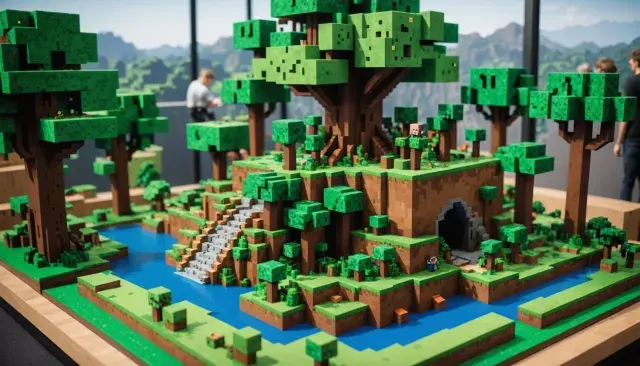
Minecraft players logged over 1 trillion minutes of playtime in 2023 alone, turning a pixelated block-builder into the most enduring phenomenon among computer games. This game defies the fast-paced churn of gaming platforms by letting users craft worlds from scratch, fueling an online community that spans generations. Developers at Mojang crafted Minecraft as a sandbox where players punch trees for wood, mine ores for tools, and build anything imagination dictates—castles, circuits, entire cities.
What sets it apart lies in its persistence. Unlike linear adventures that end at credits, Minecraft evolves with player input. Updates introduce redstone mechanics for logic gates or aquatic biomes teeming with new mobs. This adaptability draws coders, architects, and storytellers alike, forming the backbone of its gaming appeal. Check out insights from tez888.io for community-driven builds that push creative boundaries further.
Readers seeking to grasp why Minecraft dominates computer games and online communities will find here a breakdown of its core mechanics, social dynamics, platform reach, and lasting impact on gaming. This article equips enthusiasts with tools to engage deeper, whether launching a server or modding for custom play. Expect clear paths through its history, features, multiplayer layers, and future trajectory—knowledge that transforms casual play into mastery. (198 words)
History and Evolution of Minecraft
This section traces Minecraft's origins and key milestones, answering when it launched, how it grew, and what drove its rise. Keywords: minecraft, game, computer games.
Origins in Indie Development
Markus Persson coded the first Minecraft prototype in 2009 as a solo project. Players explored caves and placed blocks in alpha versions sold via forums. Early sales hit 20,000 copies in weeks, proving demand for open-ended computer games.
Major Updates and Milestones
- Cave Game to full release in 2011, adding survival mode.
- Aquatic Update in 2018 expanded oceans with shipwrecks and dolphins.
- Nether Update refined hellish dimensions with new biomes.
Each patch responded to community votes, cementing Minecraft as a living game.
Acquisition by Microsoft
Microsoft bought Mojang for $2.5 billion in 2014. This fueled cross-platform ports while preserving core freedom. Revenue now exceeds $3 billion annually from sales and add-ons.
Core Gameplay Mechanics
This section explains fundamental systems, answering how players interact with the world and progress. Keywords: game, minecraft, gaming.
Survival and Creative Modes
Survival demands gathering resources to craft tools and fend off creepers at night. Creative mode removes limits, supplying infinite blocks for instant construction. Switch modes mid-game to prototype builds safely.
Crafting and Redstone Engineering
A 2x2 or 3x3 grid turns sticks and planks into swords or pistons. Redstone wires power automated farms or hidden doors, mimicking electricity in block form.
Exploration and Biomes
Over 70 biomes range from cherry groves to mangrove swamps. Each yields unique materials like ancient debris, encouraging vast world traversal.
Combat and Mobs
Zombies and skeletons spawn nocturnally; bosses like the Ender Dragon cap endgame raids. Enchant armor with books from librarians for edge in fights.
Minecraft as a Gaming Platform
This section covers technical infrastructure, answering supported devices and mod support. Keywords: gaming platform, computer games, minecraft.
Cross-Platform Compatibility
Java Edition runs on PCs with mods; Bedrock Edition spans Windows, consoles, mobile via Microsoft Store. Realms service hosts persistent worlds for 10 players.
Mods and Resource Packs
- Mods add dimensions or tech trees via Forge loader.
- Packs reskin blocks or tweak sounds without code.
CurseForge hosts millions of downloads, extending shelf life.
Marketplace and Add-Ons
Official store sells worlds, skins, mash-ups with Star Wars themes. Free community alternatives thrive on sites like Planet Minecraft.
Online Community Dynamics
This section dissects social features, answering collaboration methods and culture. Keywords: online community, gaming, minecraft.
Servers and Multiplayer
Hypixel offers minigames for millions; survival servers enforce economies with player shops. LAN worlds link local friends instantly.
YouTube and Streaming Influence
Creators like Dream showcase speedruns; live streams on Twitch host viewer events. Tutorials teach efficient enchanting setups.
Forums and Discord Hubs
Reddit's r/Minecraft tallies 7 million subscribers discussing glitches or lore theories. Discord servers coordinate massive builds.
Toxicity Prevention Measures
Report systems and whitelist servers filter griefers. Community guidelines promote inclusive play.
Educational and Cultural Impact
This section highlights broader applications, answering non-gaming uses. Keywords: gaming platform, computer games, online community.
In Schools and Classrooms
Educators use Education Edition for history recreations or chemistry labs with element constructors. Programs reach 40 million students yearly.
Cultural Phenomena and Merchandise
LEGO sets mirror builds; concerts in virtual stadiums drew 30,000 avatars. Books and films expand the universe.
Influence on Game Design
No Man's Sky borrows procedural generation; Roblox emulates user-generated content. Minecraft proved procedural worlds sustain engagement.
Esports and Competitions
Minecon events feature build contests; Minecraft Championship pits teams in custom challenges.
Future Directions in Gaming
This section speculates based on trends, answering upcoming features. Keywords: gaming, minecraft, game.
Upcoming Features and Snapshots
Snapshots test archaeology sites and mob votes yearly. Bundles streamline inventory management.
VR and AR Integrations
Vivecraft enables room-scale mining; AR previews blocks via phone cameras.
Sustainability and Longevity
Quarterly updates ensure relevance. Community mods guarantee evolution beyond official support.
Frequently Asked Questions
Is Minecraft free to play?
No, Minecraft requires purchase: $30 for Java Edition, $7-30 for Bedrock on various platforms. Free trials exist for 100 minutes of play. Servers and realms incur extra hosting fees.
How do I install mods safely?
Use official launchers like CurseForge or Modrinth. Back up worlds first. Stick to verified authors to avoid malware; Java Edition supports most mods.
Can Minecraft run on low-end PCs?
Yes, base requirements fit integrated graphics and 4GB RAM. Optifine mod boosts FPS by optimizing renders. Allocate more RAM via launcher settings for large worlds.
What's the difference between Java and Bedrock?
Java offers superior modding and redstone; Bedrock provides better performance and cross-play. Java suits creators, Bedrock casual multiplayer.
How do I host a private server?
Download server software from minecraft.net. Port forward 25565 or use realms. Plugins like EssentialsX add commands for management.
Does Minecraft have an endgame?
Defeat the Ender Dragon to access end cities, but infinite updates and builds provide endless goals. Speedrunners aim for sub-20 minute clears.

